BODY BATTERY · Feature deep dive · 3 min read
A practical feature review
Who it helps
Coaches deciding whether client readiness context belongs in their review process.
How to evaluate it
Inspect the current check-in fields, history, sensitivity, and coach-control options.
What the coach sees
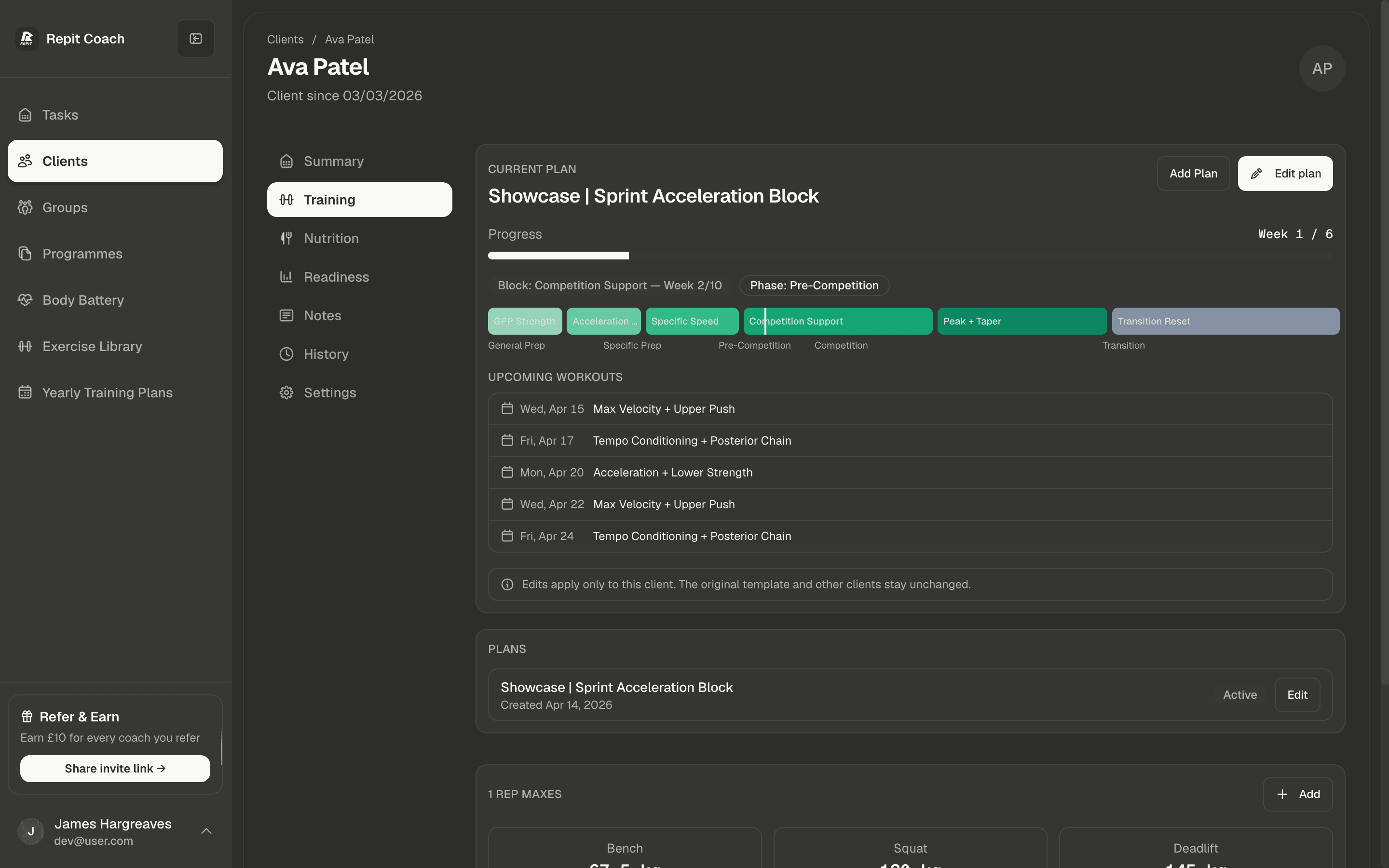
You read each check-in against that client's own baseline, next to the session you planned for them.
What the client sees
The client answers a short check-in before training and sees the readiness score it produces.
Before you use it
Allow enough client-specific history for context and keep the workflow optional where needed.
01 · Why we built it
You cannot be there every morning. Your judgement can be.
Some mornings a client is primed; some mornings recovery is poor. You would not prescribe the same session to both, but checking every client before every session does not fit a growing roster.
Body Battery is that call, written down once and applied every day. The rules are yours; the system just runs them while you sleep. Every athlete gets the session you would have prescribed for the person who actually turned up.
02 · Readiness score
Readiness signals you can act on.
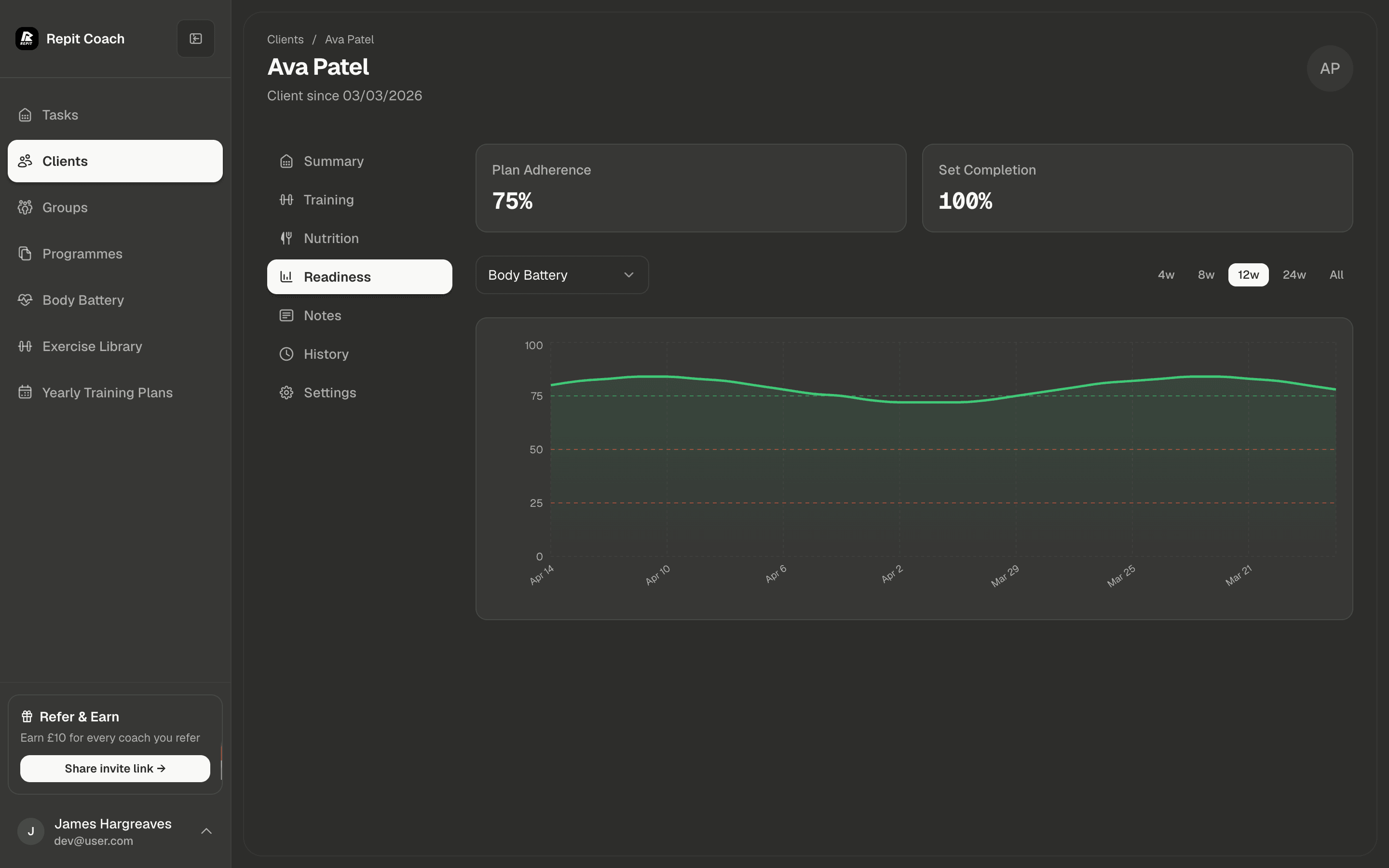
The client check-in records perceived recovery and related recovery inputs for the coach to review.
Review the available check-in fields in the current client app before enabling the workflow.
03 · Your sensitivity
Choose how readiness should be reviewed.
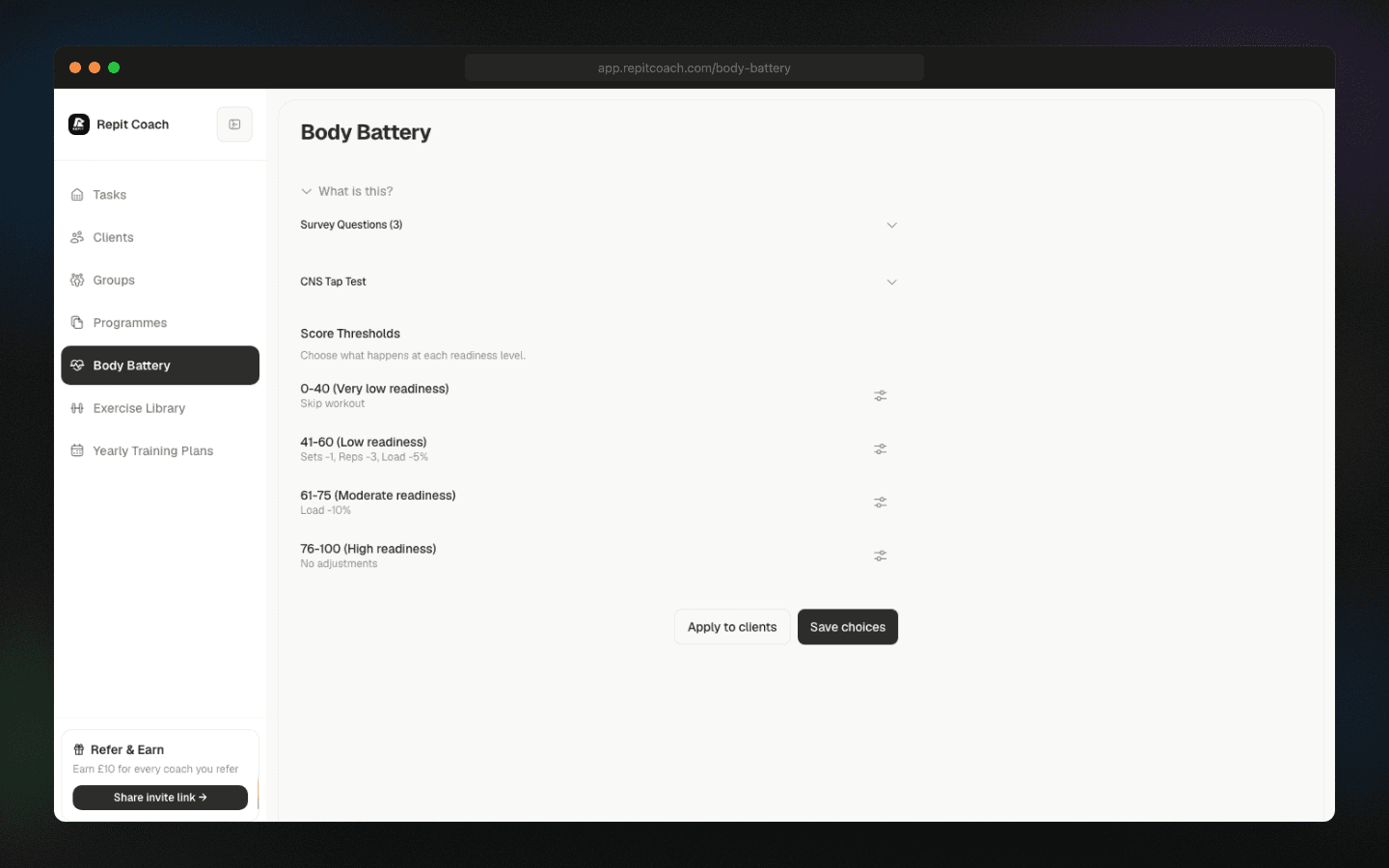
You stay in control without managing fixed score thresholds. Choose conservative, balanced, or responsive sensitivity, and Repit decides whether today is steady, low, very low, good, or primed relative to the client's own recent normal.
Some coaches adjust at the first wobble; some only step in when something is clearly wrong. Pick the sensitivity that matches how you coach, and the system intervenes exactly as often as you would — heavier when they are primed, lighter when they are run down, cancelled when recovery is genuinely poor.
04 · The baseline
Better coaching decisions at roster scale.
Body Battery compares a client with their own recent check-in history rather than a generic population score. Recent entries carry the context for the coach to review as the client adapts.
A low morning score can mean something different for each athlete. The personal history helps the coach interpret the current check-in before applying an adjustment.